The napkin
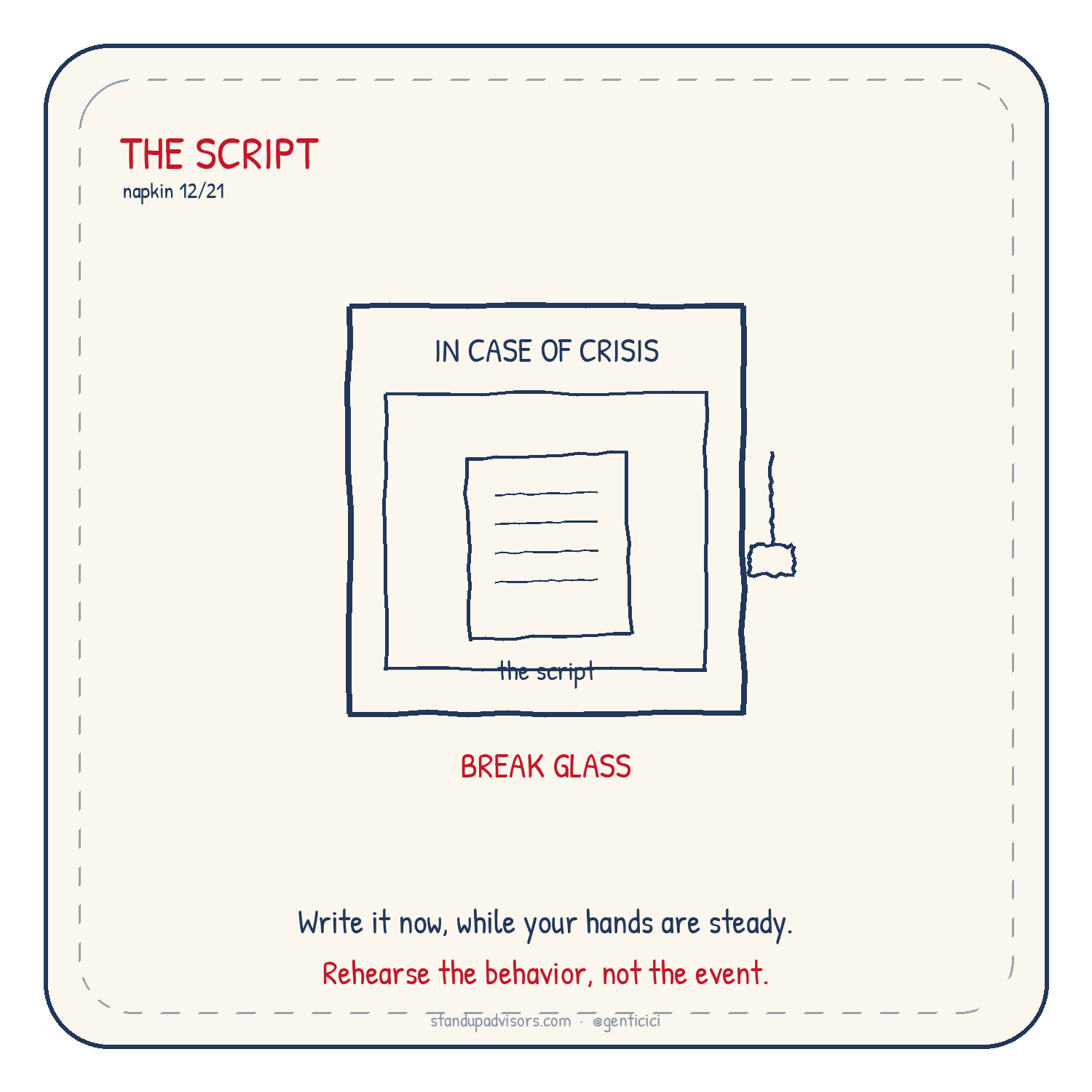
Napkin 12 of 21
The script: the calm response, written before the Monday that needs it.
If an idea does not fit on a napkin, it is probably not an idea yet. Redraw this one on your own.
When the crisis hits and everyone looks to you for the answer, you’re afraid you’ll freeze.
The market drops six percent over a weekend and the phone rings at 7:14. But notice what the caller is actually afraid of, because it isn’t the money. It’s that his wife is watching, and his kids, and he’s the one who’s supposed to have the answer. The identity on the line isn’t wealthy man. It’s competent man, the one people rely on. That’s not a stupid fear. When the thing you vouched for falls, it’s your credibility falling with it.
The cost of having no script is that your cortisol does the thinking at exactly the moment the stakes are highest, and moving at the wrong moment costs something like ten times the discomfort of sitting still. You can’t pre-write the event. Nobody can. But you were never scripting the event. You were rehearsing the response. If your crisis mornings are exciting, the failure didn’t happen that morning. It happened in every calm meeting where nobody mentioned the storm.
Pre-write the response to the crisis you know is coming, while you’re calm. Rehearse the behavior, not the event.
Name the crisis you can already see coming: the layoff, the diagnosis, the market drop, the conversation you keep not having. Now, while you’re calm and fear is quiet, draft your response, down to the first sentence you’ll say and the first thing you’ll do. Write it on paper. Keep it somewhere you can find in the dark.
The script: the calm response, written before the Monday that needs it.
If an idea does not fit on a napkin, it is probably not an idea yet. Redraw this one on your own.
If your particular Monday is a crash the year you retire, this lets you watch how that one actually plays out before it happens.
The system is free and it works alone. If you want a second set of hands on the wheel, that is what the Purpose Pit Stop is for.