The napkin
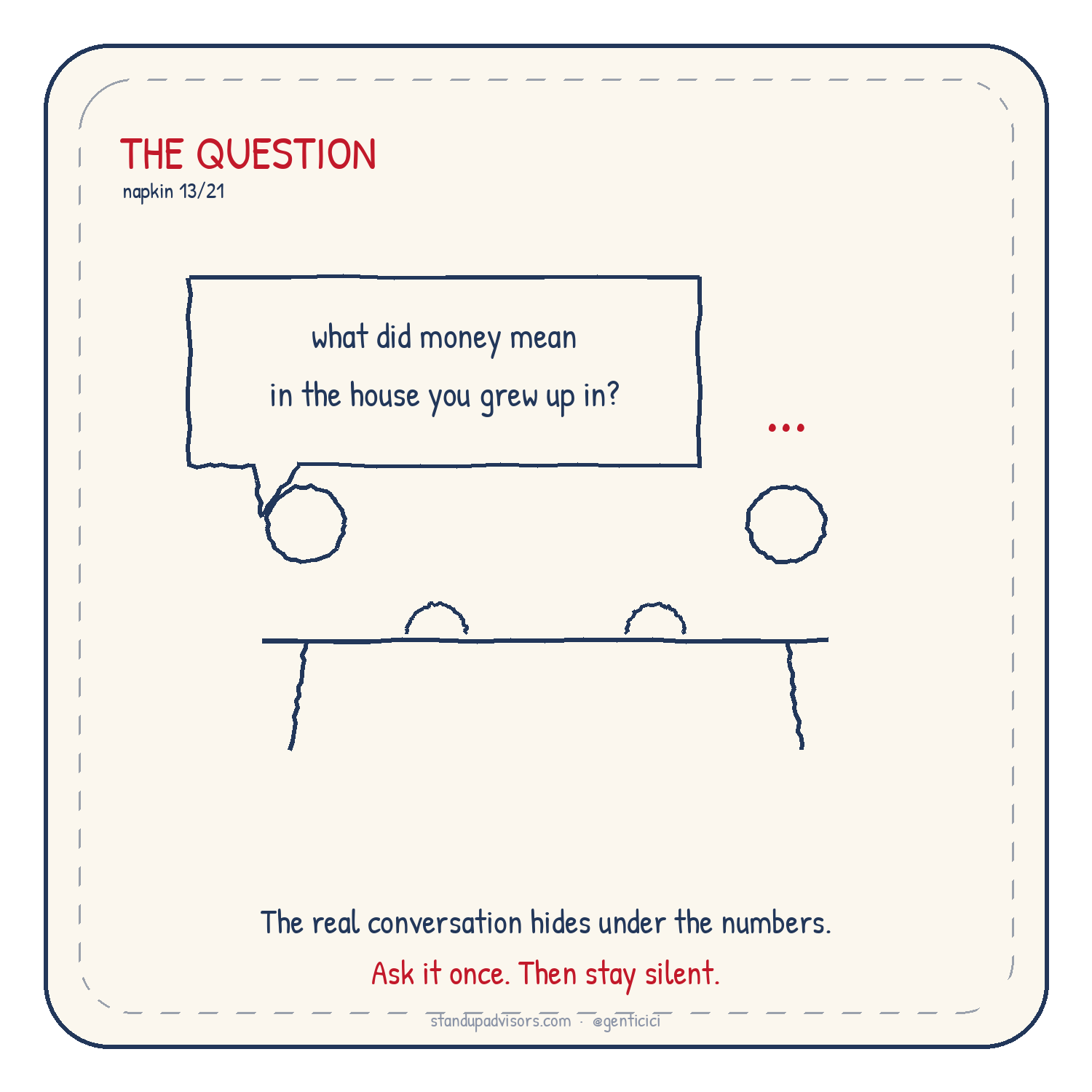
Napkin 13 of 21
The real question, asked once at the dinner table, with the silence that lets the true answer surface.
If an idea does not fit on a napkin, it is probably not an idea yet. Redraw this one on your own.
You and your partner keep fighting about money when the real fight is about something you can’t say.
You fight about the grocery bill. Both of you know it isn’t about groceries. He’s the responsible one, so I’m scared about money comes out as we spent too much: an accusation instead of a confession. She’s the one who didn’t repeat her mother’s life, so budget talk trips an alarm he can’t hear. Neither of you is bad at communication. The real conversation threatens the identity each of you built inside the relationship, and that’s a reasonable thing to flinch from.
The cost is that the conflict is already happening, every week, in code, taxing both of you in resentment and distance. Couples who fight about money early are among the likeliest to split, not because money matters more than love, but because money fights are never actually about money, so they can never be resolved. You can settle a dispute about groceries. You cannot settle one that is secretly about a father who kept score. The couples who split didn’t fight more. They fought in code longer.
Ask once, “what did money mean in the house you grew up in?”, then stay silent long enough for the true answer.
Pick a calm evening, kids down, nothing due. Ask one real question: what did money mean in the house you grew up in? Or straight to it: what are you most afraid of about the next five years? Then do the hard part. Stay silent long enough for the real answer to surface. No follow-up, no rebuttal. Reflect back what you heard before you answer it. If you’re at the table alone, ask yourself.
The real question, asked once at the dinner table, with the silence that lets the true answer surface.
If an idea does not fit on a napkin, it is probably not an idea yet. Redraw this one on your own.
The system is free and it works alone. If you want a second set of hands on the wheel, that is what the Purpose Pit Stop is for.