The napkin
Napkin 9 of 21
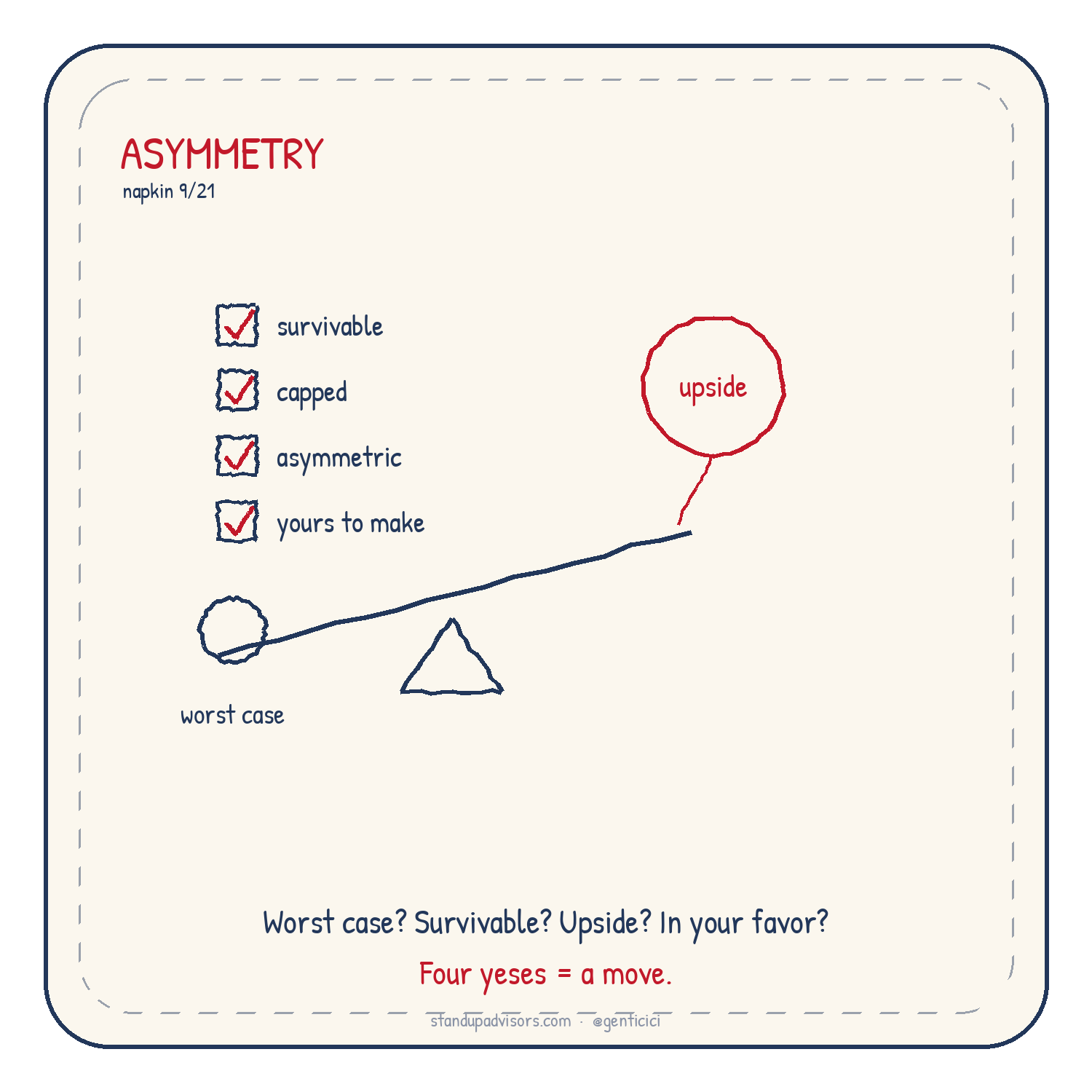
Asymmetry: a small survivable downside next to a much larger upside, the shape that outranks the noise.
If an idea does not fit on a napkin, it is probably not an idea yet. Redraw this one on your own.
You see something nobody around you sees, and everyone you respect thinks you’ve lost your mind.
When you make a move nobody around you has made, the crowd doesn’t audit your analysis. They consult their own comfort with the unfamiliar and hand you back their discomfort with your name on it, relabeled as your risk. The fear was never about the money. It’s about ending up outside the circle, the only one who saw a thing that wasn’t there. When everyone you respect thinks you’re wrong, the question stops being what if I lose and becomes what if they stop seeing me as someone worth respecting.
That’s the bill most people can’t pay, so they fold, and tell themselves the analysis changed. That’s the cost. But the fear isn’t stupid, because sometimes the crowd is right and you are the fool. Conviction is not evidence, and plenty of people have driven off a cliff certain everyone else just couldn’t see their spreadsheet. So the discipline was never ignore everyone and trust your gut. It was four questions that interrogate your own overconfidence as hard as they discount the crowd’s fear.
Worst realistic case? Can I survive it? Upside if I’m right? Is the asymmetry in my favor? Four yeses = a move.
Take the move in front of you, the one people keep pausing at, and write four honest answers. What is the worst realistic outcome, not the fantasy version? Can I survive it? What is the payoff if I’m right? Is the asymmetry genuinely in my favor? Four yeses and the crowd’s discomfort is theirs to carry. Fewer, and their caution wasn’t fear; it was correct.
Asymmetry: a small survivable downside next to a much larger upside, the shape that outranks the noise.
If an idea does not fit on a napkin, it is probably not an idea yet. Redraw this one on your own.
The system is free and it works alone. If you want a second set of hands on the wheel, that is what the Purpose Pit Stop is for.