The napkin
Napkin 20 of 21
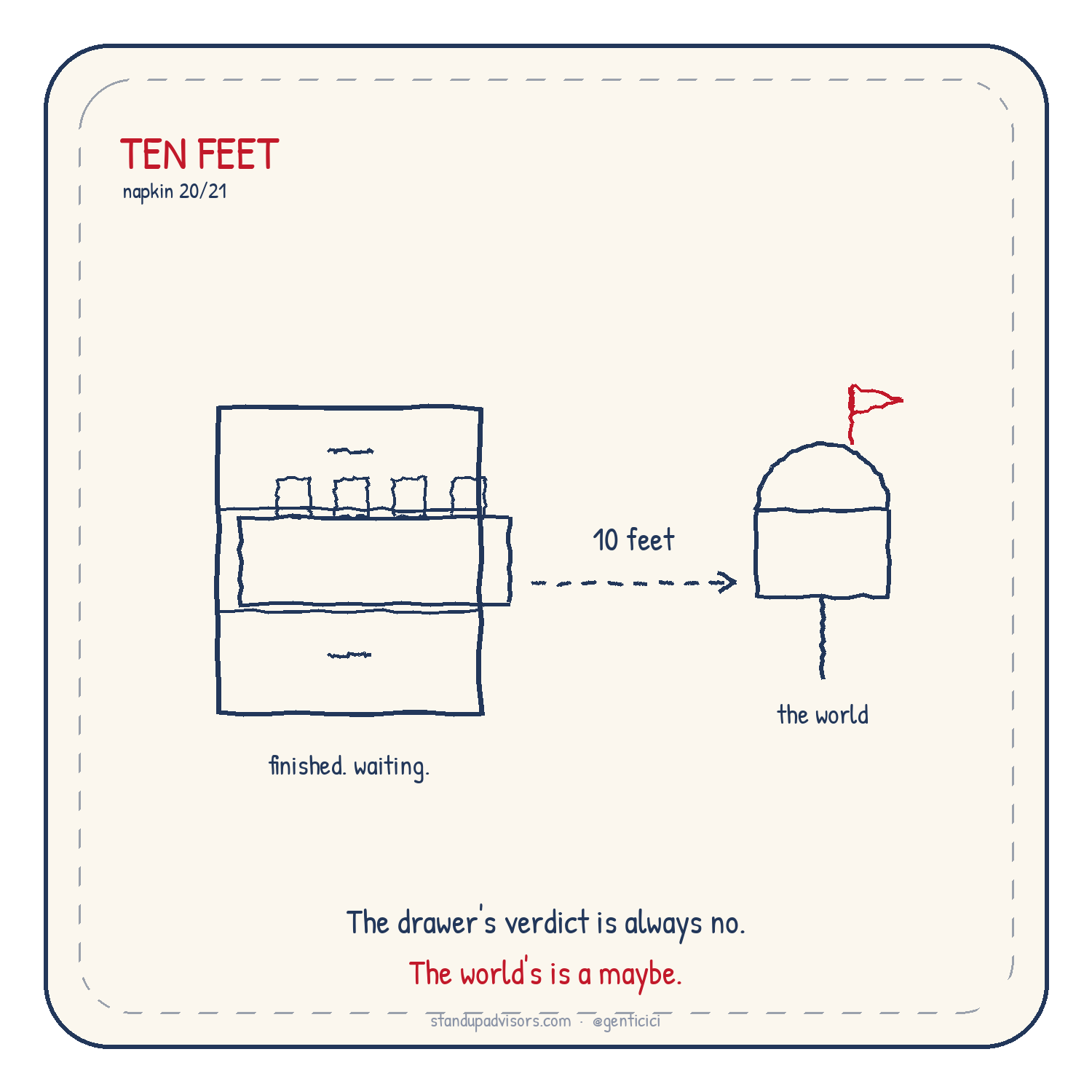
The last ten feet: the finished thing, the drawer, and the switch between it and the world.
If an idea does not fit on a napkin, it is probably not an idea yet. Redraw this one on your own.
The work is finished and sitting in a drawer, because showing it means finding out what it really is.
This fear arrives after the work is done. The manuscript, the plan, the application, the offer: finished, waiting on one act of exposure. The drawer’s logic is airtight, which is why so many capable people live by it. Unshipped, the work is still potentially great. Shipped, it’s measurably whatever it is. Fear frames the choice as dream versus verdict, and the drawer wins, quietly, reasonably, year after year. It isn’t a stupid fear. Being judged does hurt.
The cost is that a finished thing in a drawer isn’t a preserved dream. It’s a generator with the switch off. Work that ships produces readers, clients, the criticism that sharpens you, the next idea, a version of you that only exists on the far side of being seen. None of that compounds at zero. The drawer doesn’t protect the dream. It guarantees the rejection comes from you, on schedule, every day, with no appeal. The world’s verdict is a maybe. The drawer’s is a certain no.
One finished thing. The smallest public act that makes it real. A date inside seven days, one witness, ship at 60-70%. The drawer’s verdict is always no; the world’s is a maybe.
Pick one finished thing. Define the smallest public act that makes it real: send it to one editor, post it, list it, submit it. Put a date on it inside seven days. Tell one person the date, because a witness turns an intention into an appointment. Then ship on schedule, before it feels ready. You decided it was worthy when you finished it.
The last ten feet: the finished thing, the drawer, and the switch between it and the world.
If an idea does not fit on a napkin, it is probably not an idea yet. Redraw this one on your own.
The system is free and it works alone. If you want a second set of hands on the wheel, that is what the Purpose Pit Stop is for.