The napkin
Napkin 14 of 21
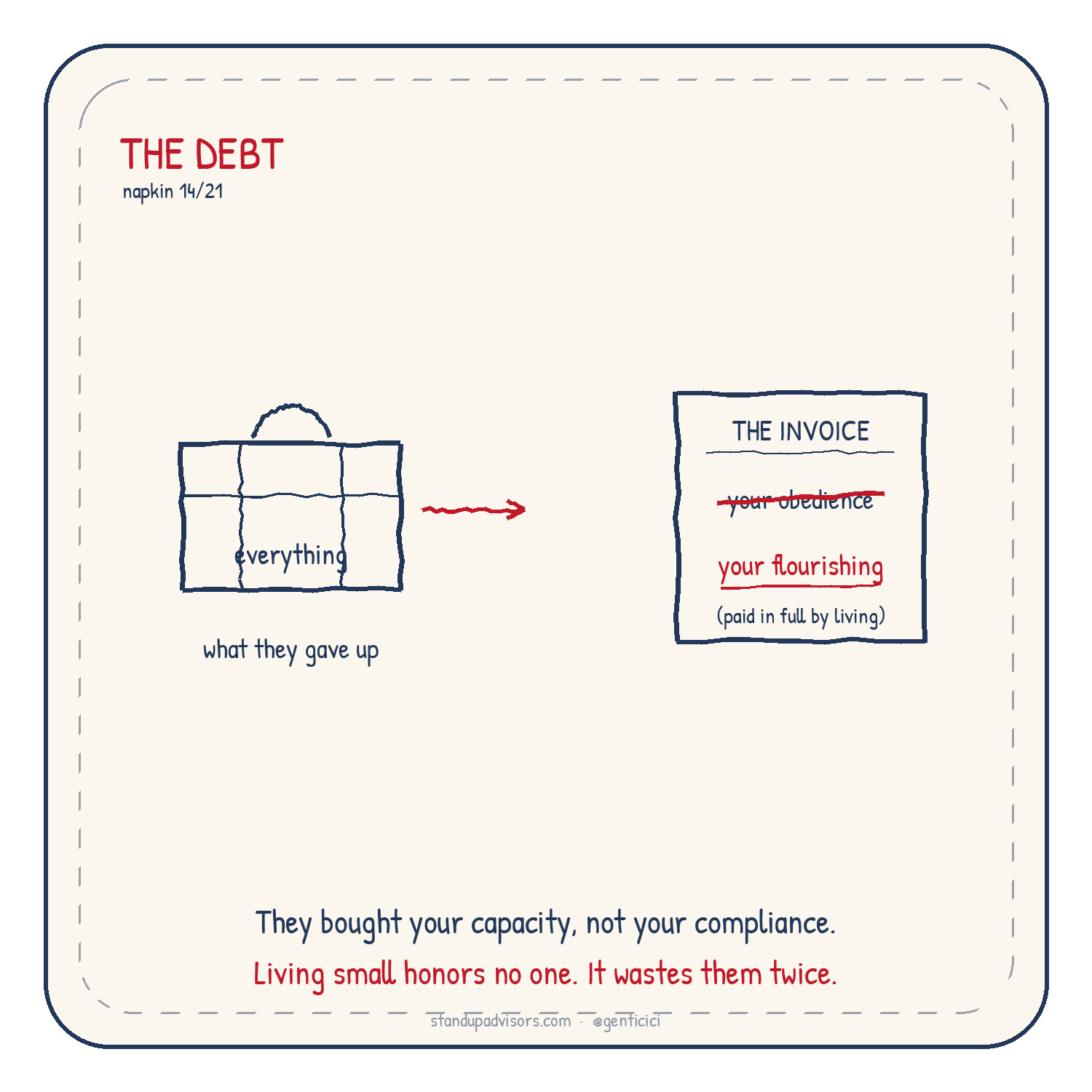
The debt you didn’t sign for: the sacrifice on one side, and what it was actually buying on the other.
If an idea does not fit on a napkin, it is probably not an idea yet. Redraw this one on your own.
You want to change course but someone sacrificed for the path you’re on, and leaving feels like betrayal.
Parents who arrived with two suitcases and worked jobs they’d never describe at dinner. A spouse who moved cities for your career and folded up theirs. Somebody invested in you, at cost, and now you carry their years as a debt you never agreed to. The thing they bought doesn’t fit, and you can’t say so, because saying so feels like telling the people who love you most that their sacrifice was for nothing. This fear outlasts the others because it has hostages.
The cost is the most respectable prison ever built: the profession they were proud of, the title they can say at church, a life that photographs well from their side of the table, and you call it gratitude. It isn’t. Gratitude and obedience are not the same thing. Real obligations exist, money, care, presence, a phone that gets answered, and most people run late on those while faithfully paying an imagined invoice nobody ever sent. Living small to honor the sacrifice is the one thing guaranteed to waste it.
Name the sacrifice you carry and who made it. Write what they were actually purchasing: not the job title, the capacity. Ask them if you can. Pay the real debt (money, time, presence); stop paying the imagined one with your years.
Name the sacrifice you’re carrying and who made it. Then write what they were actually purchasing: not the job title, the capacity. Options, safety, a bigger life. If they’re still here, ask them the real question, not are you disappointed but what did you want for me when you did that? If they’re gone, answer honestly on their behalf. You knew them.
The debt you didn’t sign for: the sacrifice on one side, and what it was actually buying on the other.
If an idea does not fit on a napkin, it is probably not an idea yet. Redraw this one on your own.
The system is free and it works alone. If you want a second set of hands on the wheel, that is what the Purpose Pit Stop is for.