The napkin
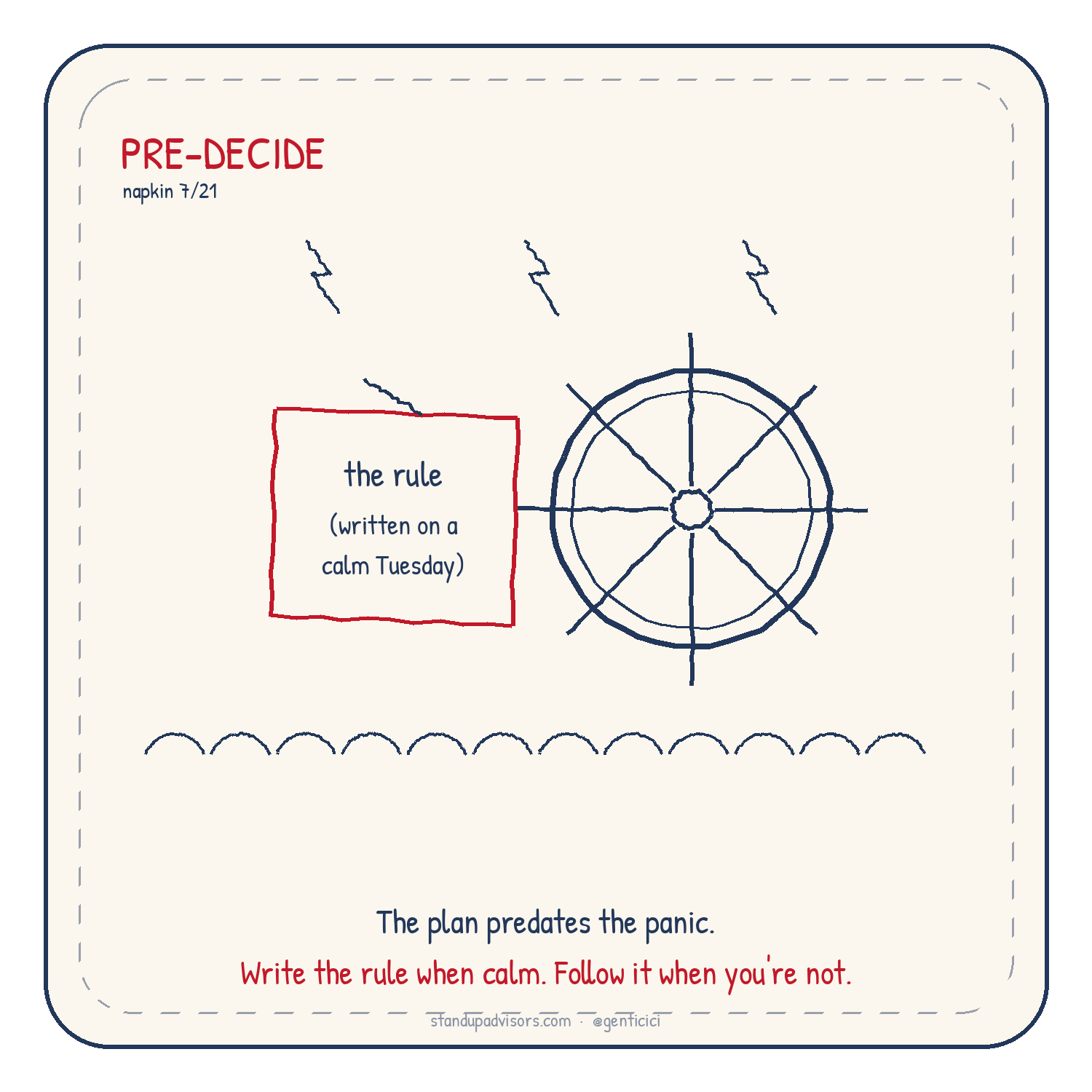
Napkin 7 of 21
Pre-decide: the rule written on a calm Tuesday, for the version of you that fear visits after dark.
If an idea does not fit on a napkin, it is probably not an idea yet. Redraw this one on your own.
You’re afraid to commit to a plan because the world keeps changing and you might pick wrong.
Making a plan is supposed to reduce fear. It creates a new one: what if I commit to the wrong thing? In a world reshaped every six months, locking in a direction can feel reckless; you could retrain for something that’s automated before you finish. The worry isn’t foolish. But it misreads what a plan is. A plan is not a vow that the world won’t change. It’s a set of pre-decided criteria you revise on purpose, in daylight, instead of abandoning in panic at 3 a.m.
The cost of not having one is that your feelings end up operating your most important decisions, and feelings are not reliable operators. You’ve already overridden a good plan at least once: sold when you should have held, quit when you should have stayed, not because the plan was wrong but because fear was louder. Fear keeps night-shift hours. You’re allowed to change the plan. You’re just not allowed to let fear change it for you.
Write the rule when you’re calm; follow it when you’re not. The plan predates the panic.
Write your top three goals on a three-year horizon. Then take the one decision you handle worst under pressure, career, money, relational, and write the rule now, while your brain works: I’ll commit to the retraining if these three conditions are met. I’ll stay if these two things are true in six months. When fear shows up after dark, don’t negotiate. Check the conditions.
Pre-decide: the rule written on a calm Tuesday, for the version of you that fear visits after dark.
If an idea does not fit on a napkin, it is probably not an idea yet. Redraw this one on your own.
The system is free and it works alone. If you want a second set of hands on the wheel, that is what the Purpose Pit Stop is for.