The napkin
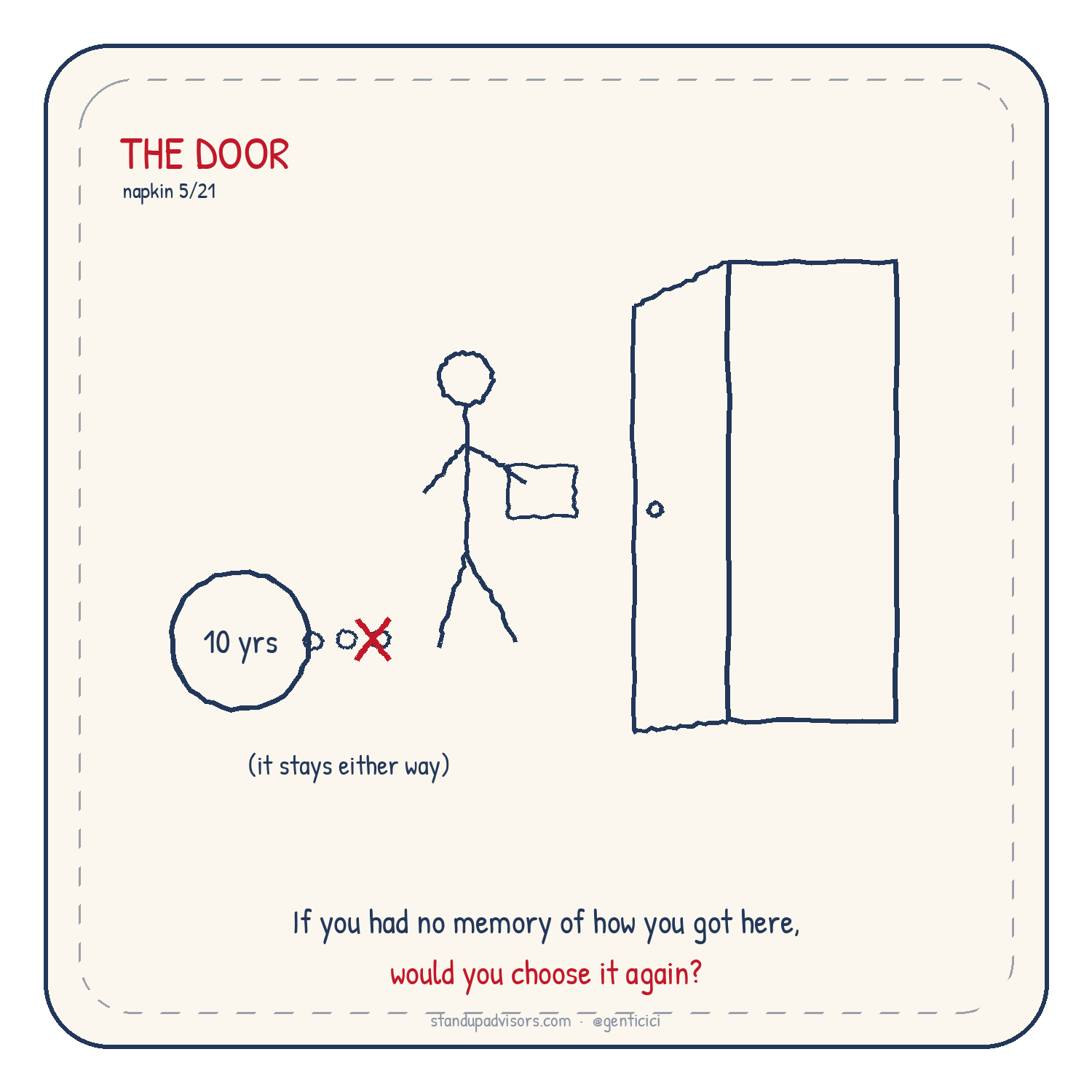
Napkin 5 of 21
The door that was harder to open, and the question that opens it: would I choose this again today?
If an idea does not fit on a napkin, it is probably not an idea yet. Redraw this one on your own.
You stay in the career, city, or group because leaving would admit the whole thing was a mistake.
The textbooks call it the sunk cost fallacy, a logic error, as if you’d stop doing it once someone explained it. You won’t, because it was never about logic. It’s about identity. I spent ten years becoming a specialist in this isn’t a statement about the specialty. It’s a statement about you: I make good choices. Walking away rewrites that story, and the admission feels heavier than the loss itself. That’s not stupidity. That’s belonging, the oldest need we have, doing its job.
The cost is years. Not ruin, usually. Just years spent guarding a hallway you’ve already outgrown: the career that stopped fitting, the city, the relationship, the room where you keep nodding at things you no longer believe. And fear points the other way too, because sometimes quitting is fear in disguise and persistence is right. So the point isn’t quit. It’s one test that tells the difference and routes around the identity story entirely.
“If I had no memory of how I got here, would I still choose this?” A real yes = stay. Anything else, you already know.
Name the thing you’re holding: the career, the city, the title, the group. Then ask: if I had no memory of how I got here, no memory of the degree, the years, the conversations where I told everyone this was the plan, would I choose it again, today? Don’t answer fast. Sit in the honest version for a full minute before your reasons rush in to rescue you.
The door that was harder to open, and the question that opens it: would I choose this again today?
If an idea does not fit on a napkin, it is probably not an idea yet. Redraw this one on your own.
The system is free and it works alone. If you want a second set of hands on the wheel, that is what the Purpose Pit Stop is for.